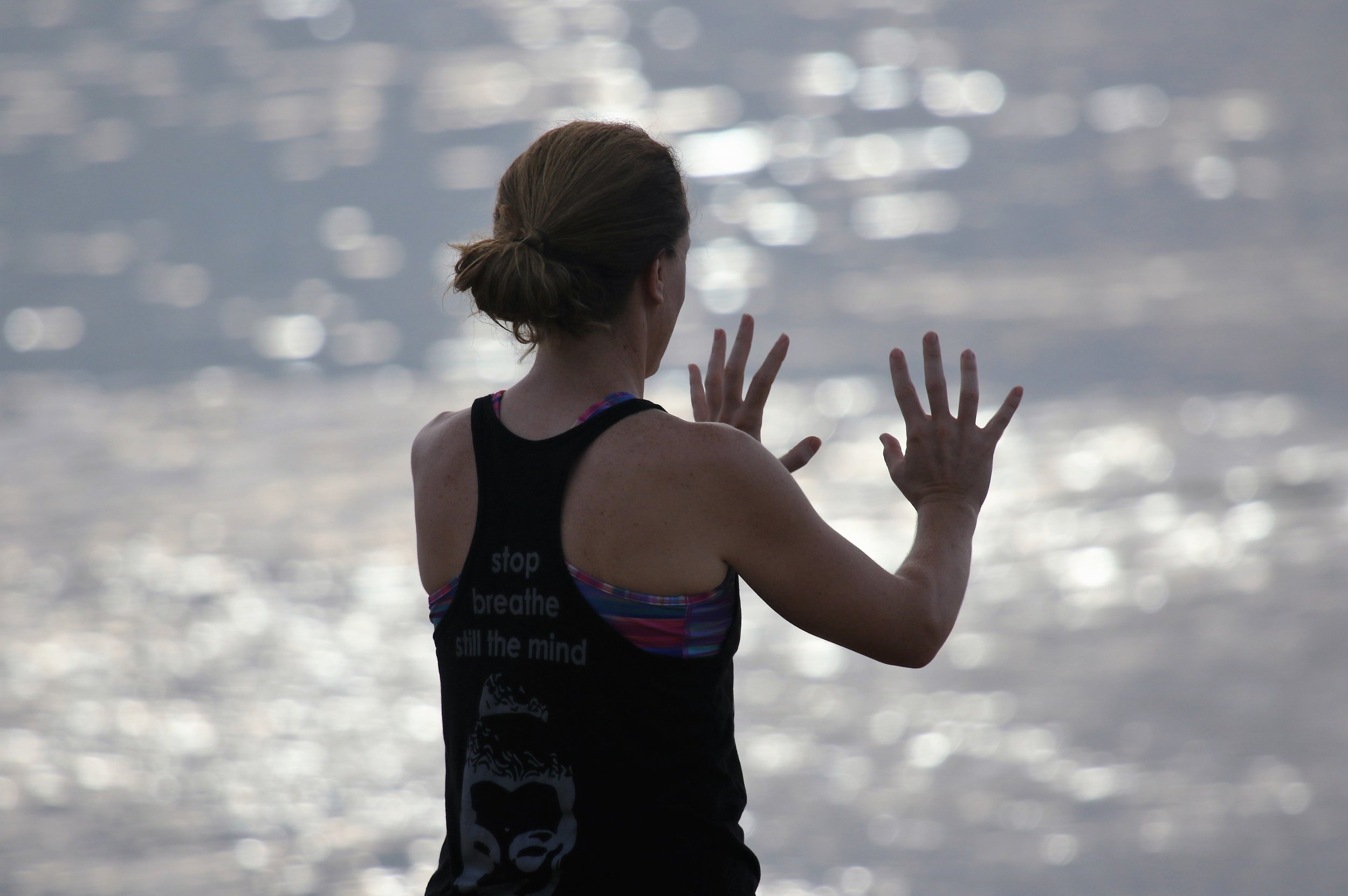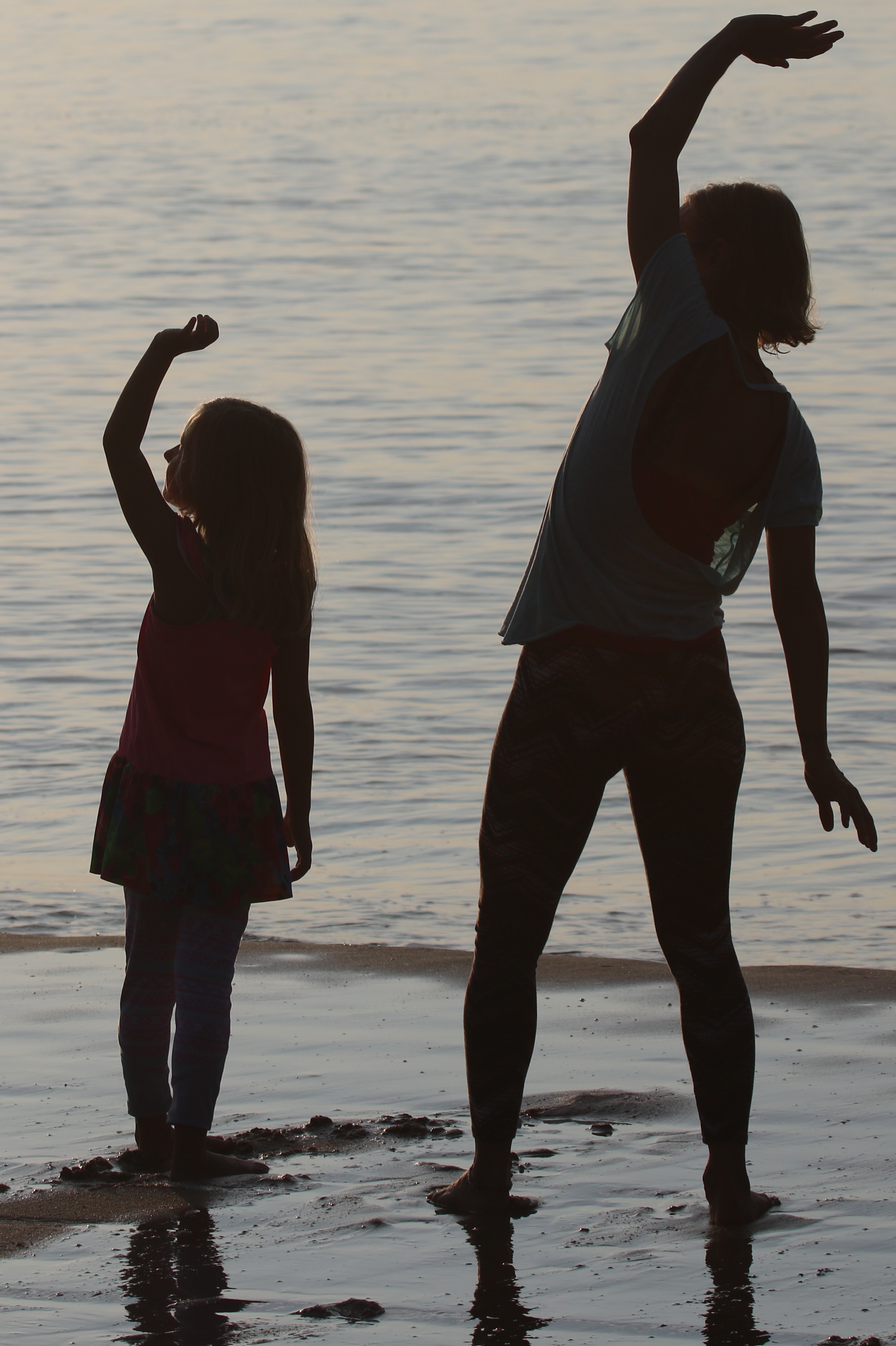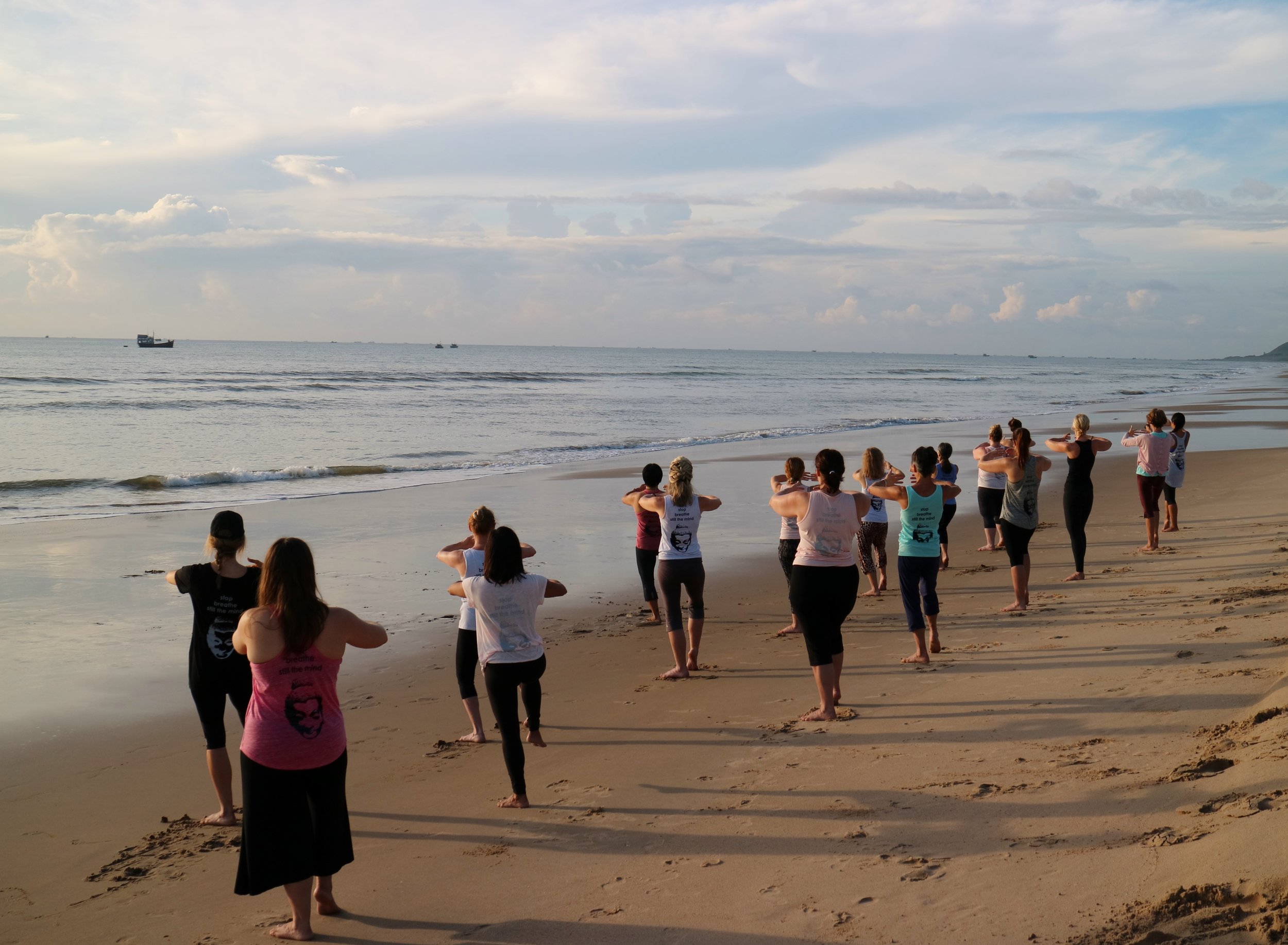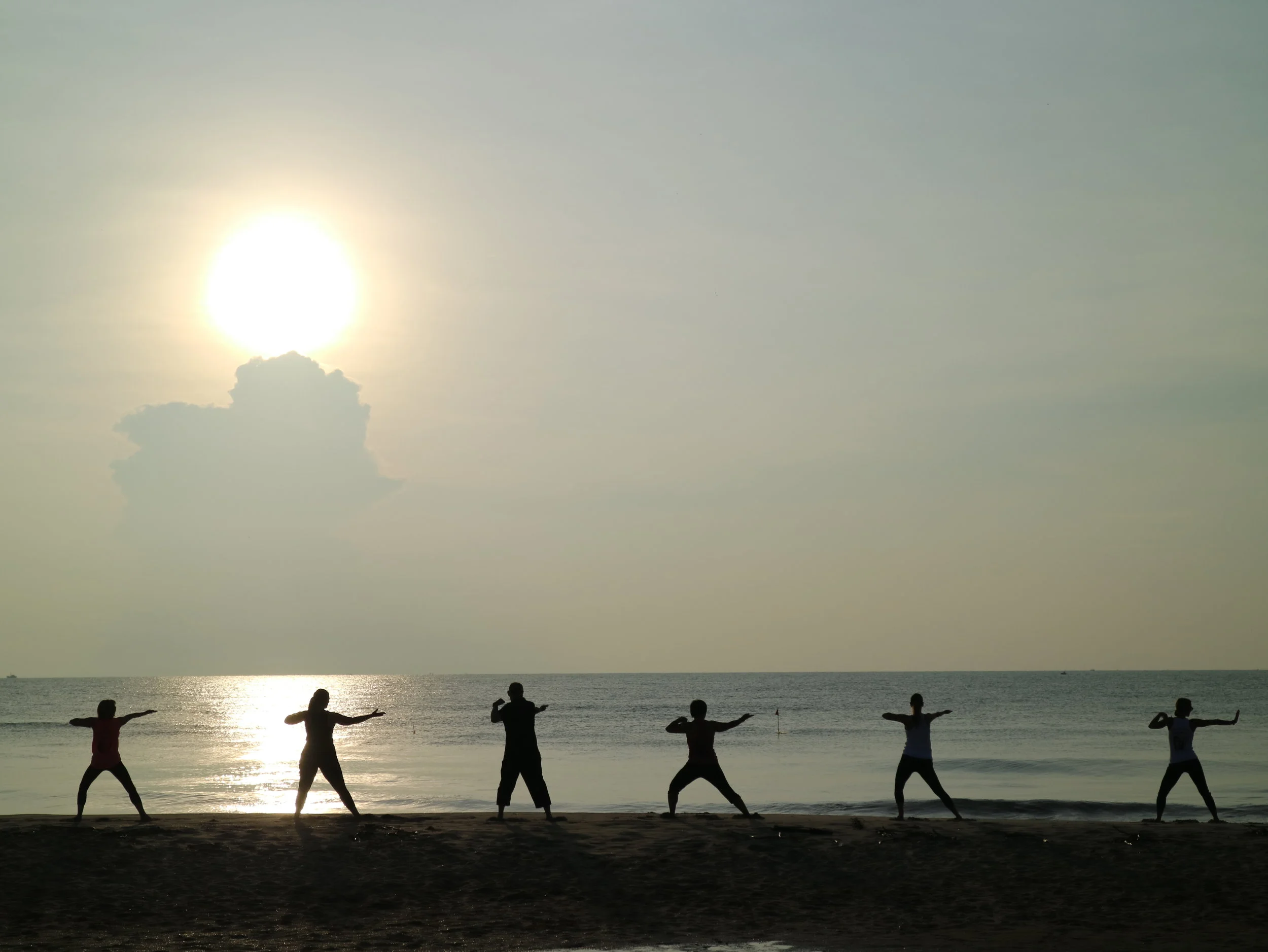

Qi Gong Teacher Training - Level 1 & 2 (100 hours)
February 18 - March 2, 2027
Mui Ne, Vietnam
Join us in tranquil Mui Ne, a peaceful fishing village along Vietnam’s southeast coast, for a 12-day Qi Gong Teacher Training designed to expand your practice and guide you on your teaching path.
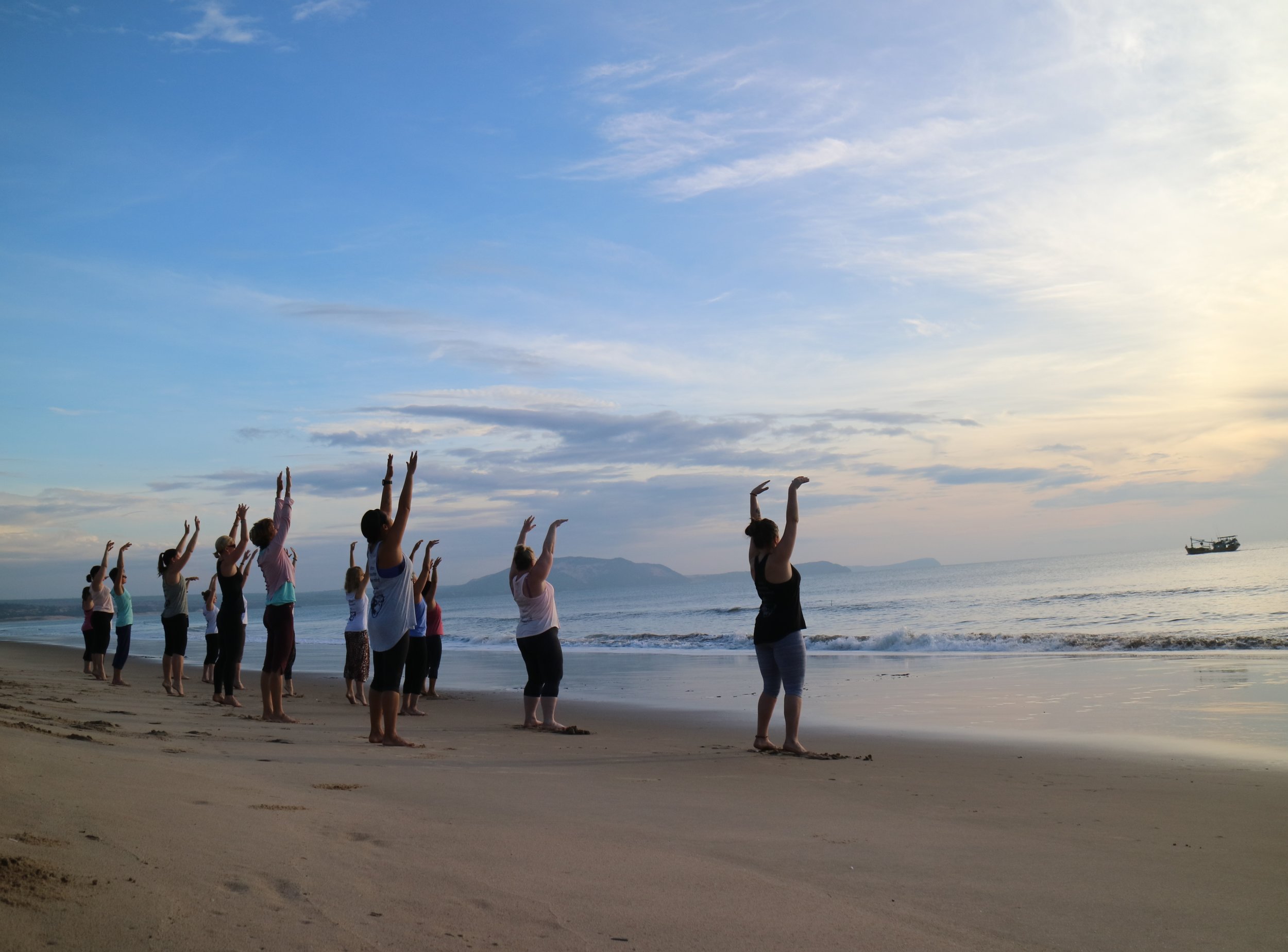
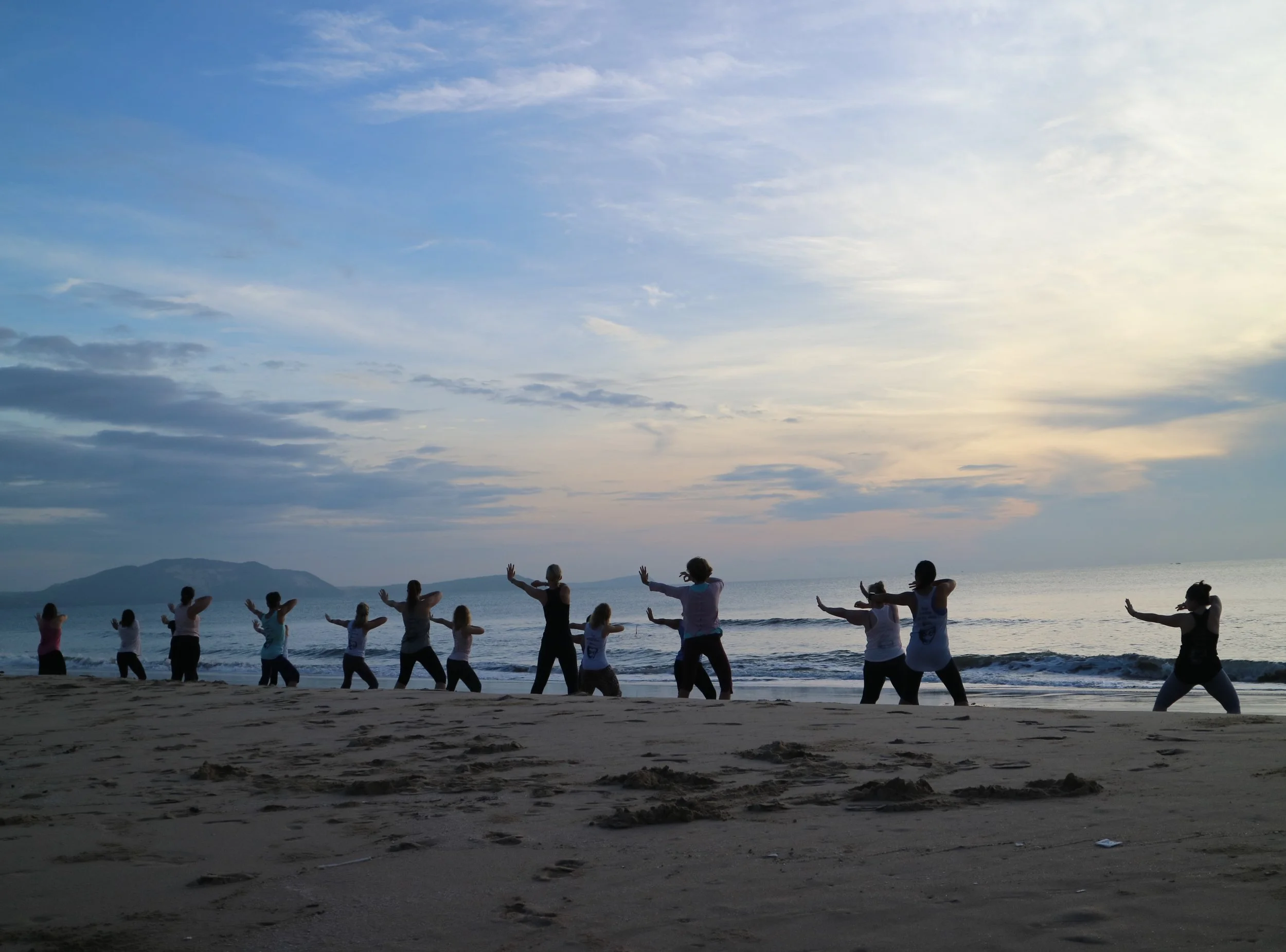
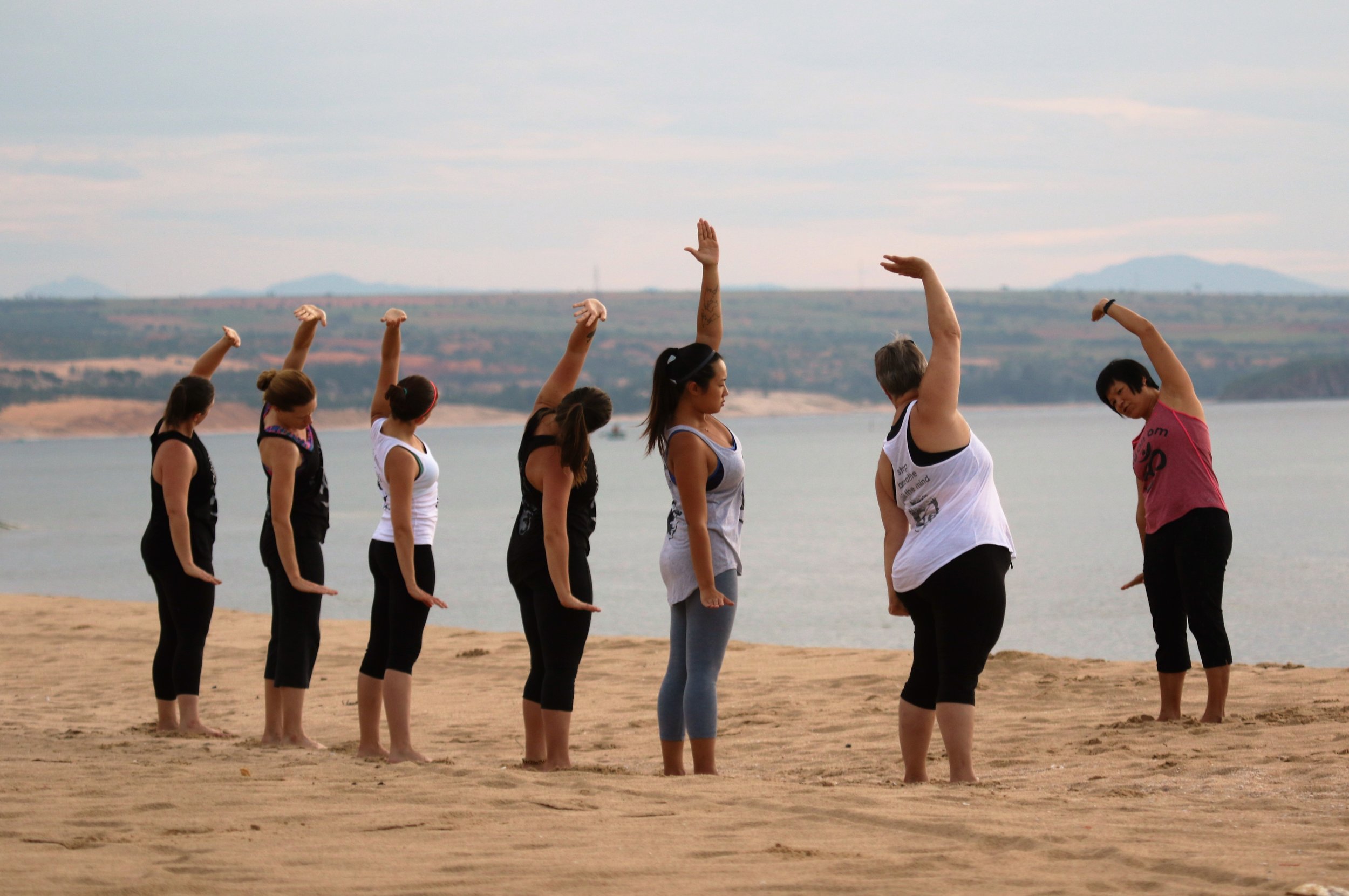
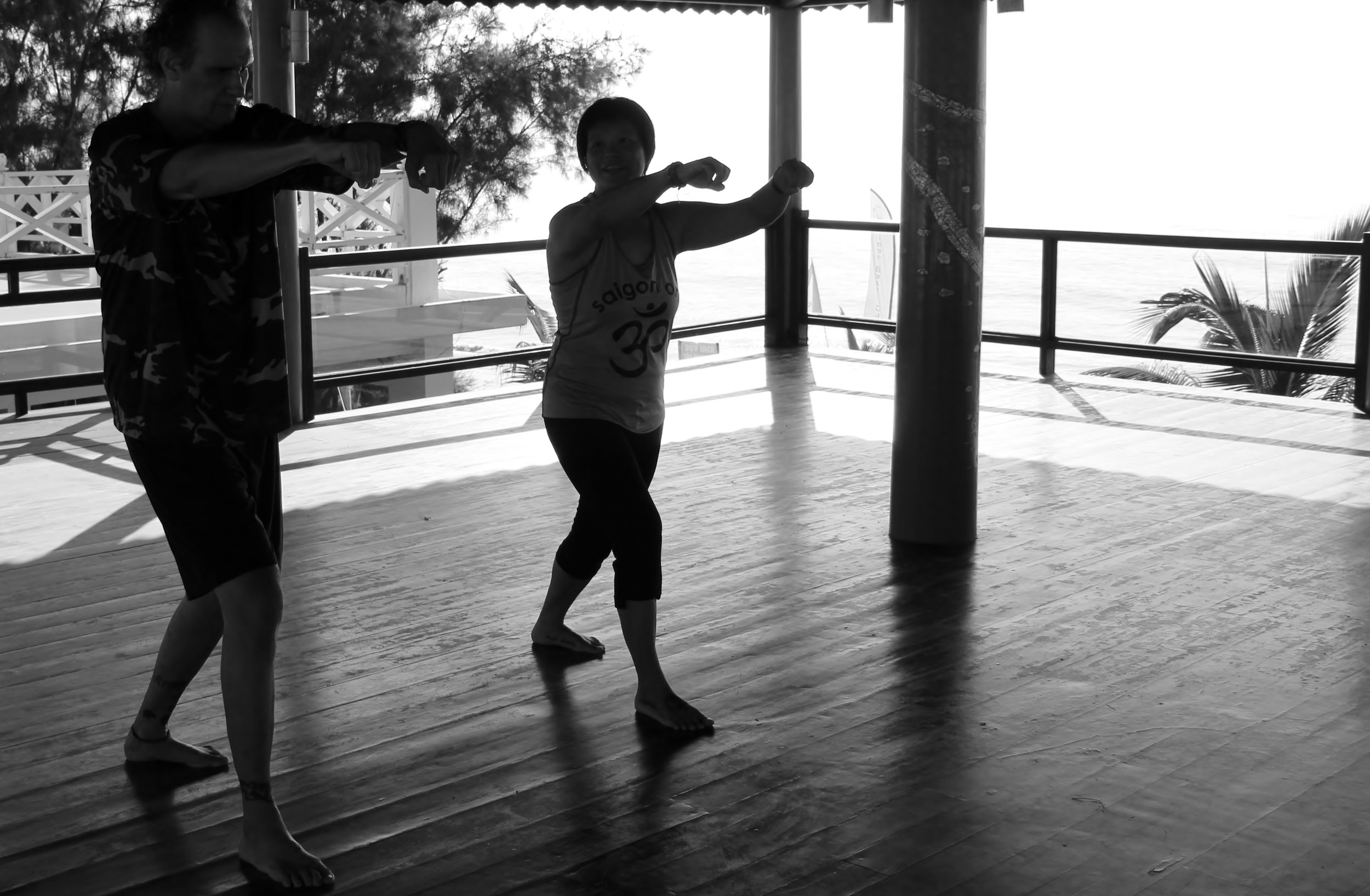
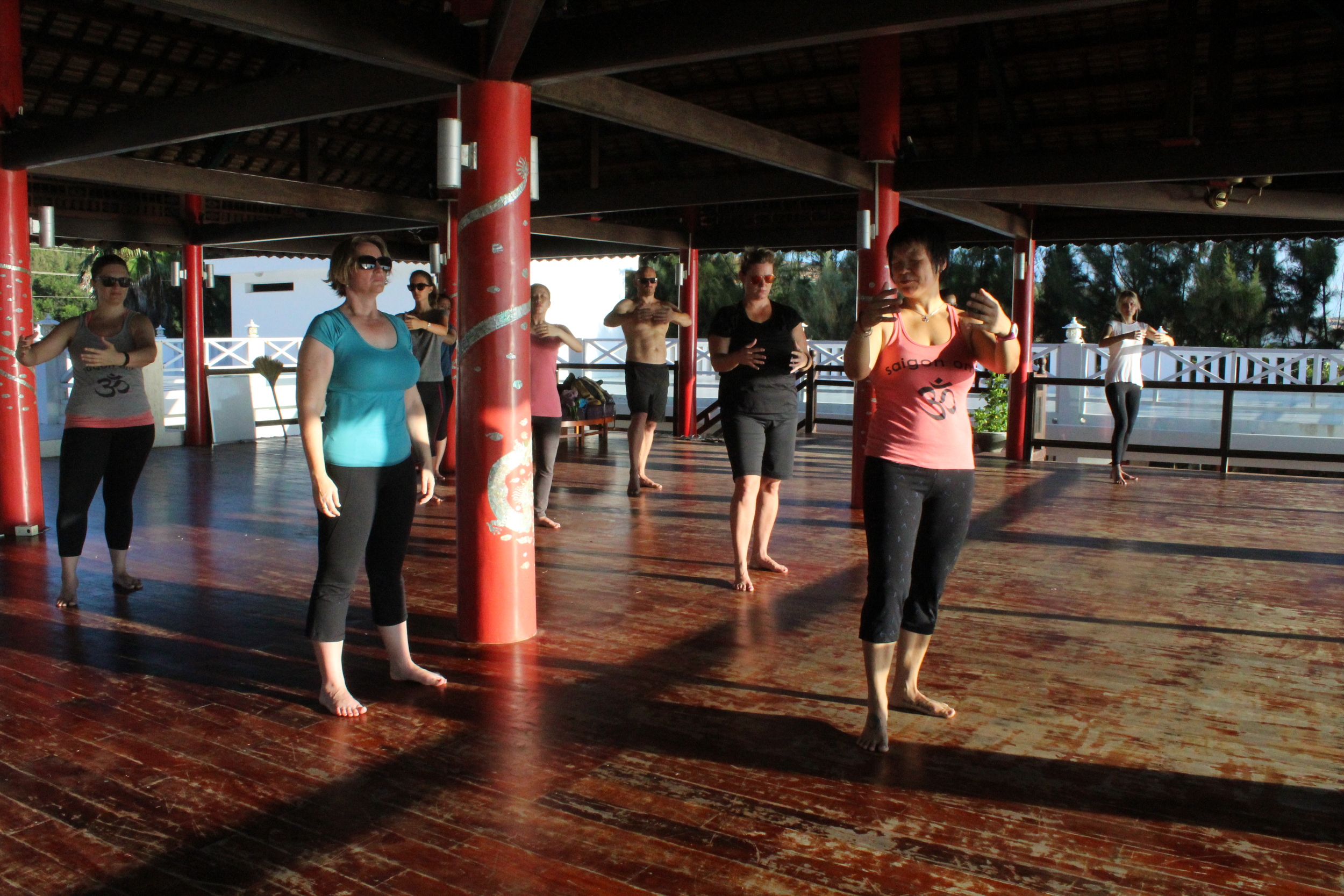
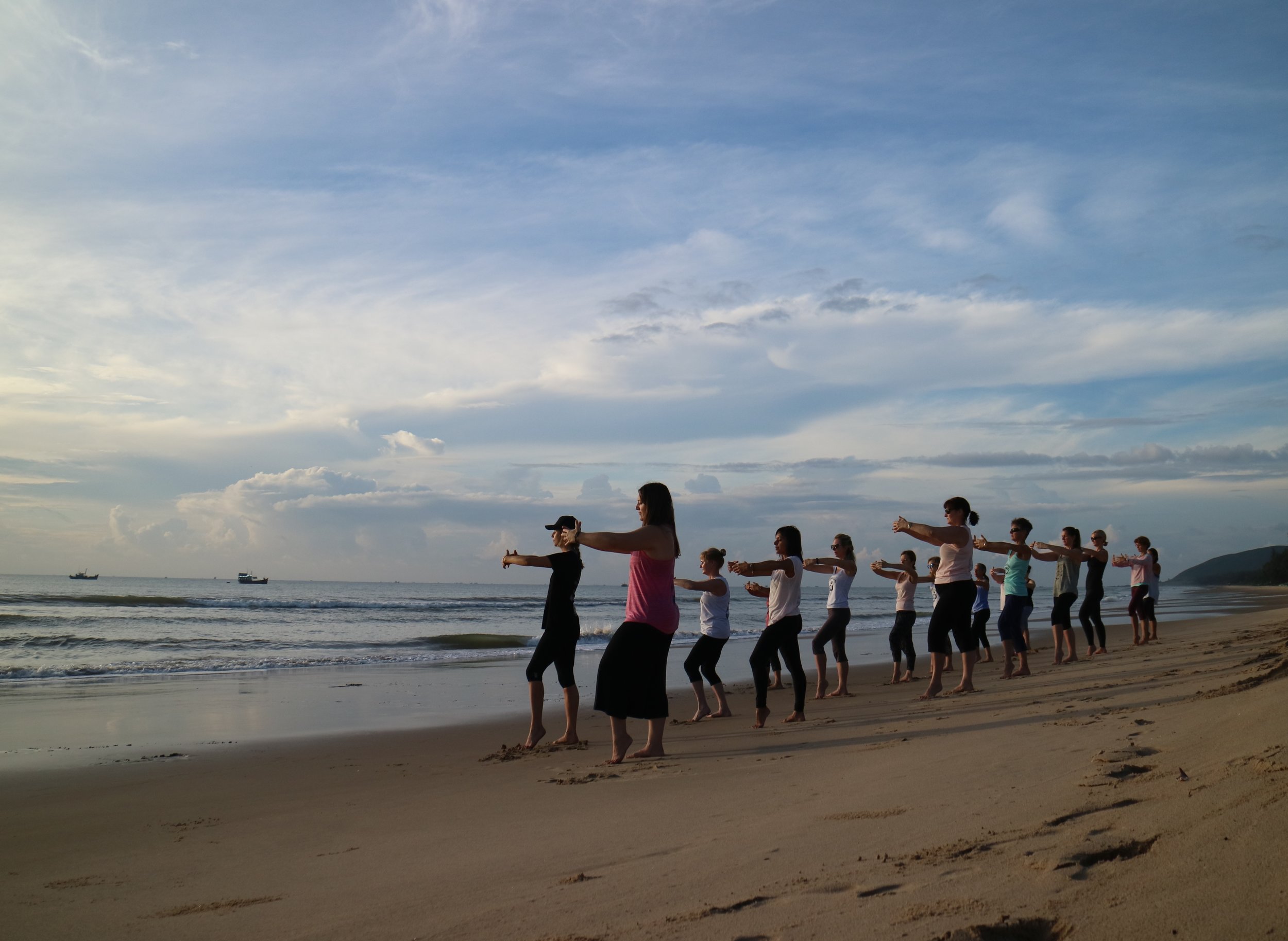
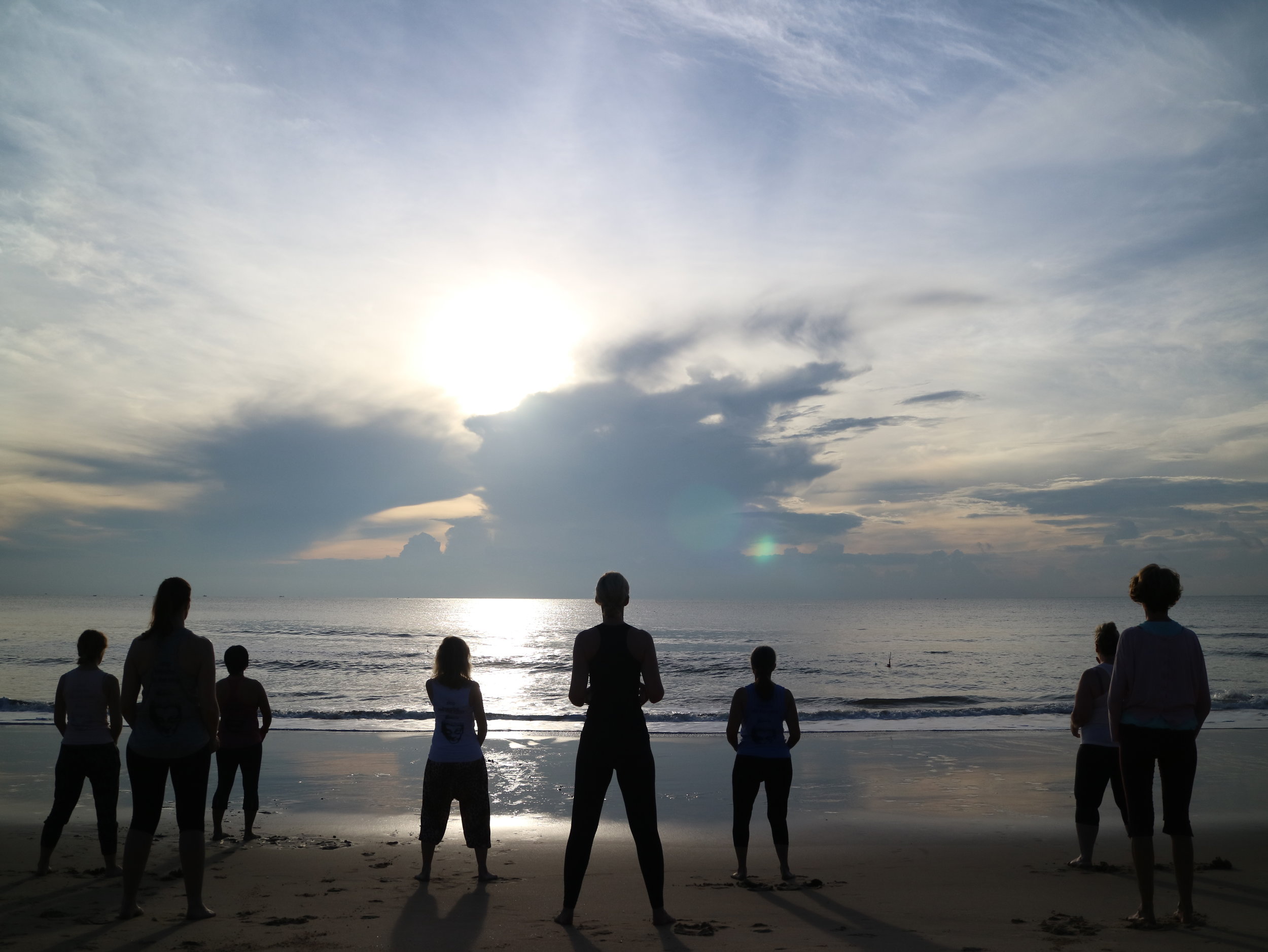
Each day begins with sunrise meditation and the gentle flow of Qi Gong. After a nourishing breakfast, mornings continue with foundational training, exploring Qi Gong principles, philosophy, meridians, and Traditional Chinese Medicine (TCM) theory. In the afternoon, you'll dive into teaching practicum and movement labs, building confidence and clarity in your practice and teaching through experiential learning and thoughtful methodology.
This training is both a personal immersion and a professional foundation, open to committed students, wellness practitioners, and aspiring teachers alike.
“I was so inspired by Hang’s presence and teachings, I decided to dive deeper, completing Level 1 and Level 2 Qi Gong Teacher Training with Hang in beautiful Vietnam.
What makes Hang’s teaching so special is her enormous wealth of knowledge and experience, her deep understanding of the body, meridians, energy and wellbeing, and above all, her compassion and genuine respect for sharing this ancient practice. She has a wonderful ability to challenge and support her students while creating a space that feels safe, nurturing and deeply connected.
Thank you, Hang, for introducing me to such a beautiful way of moving through life. I feel deeply grateful, inspired and excited to share the knowledge of Qi Gong with my community and explore how it can integrate with my creative art therapy work.
Thank you for helping me discover a gentler, more conscious and loving way of being 💚”
What is Qi Gong?
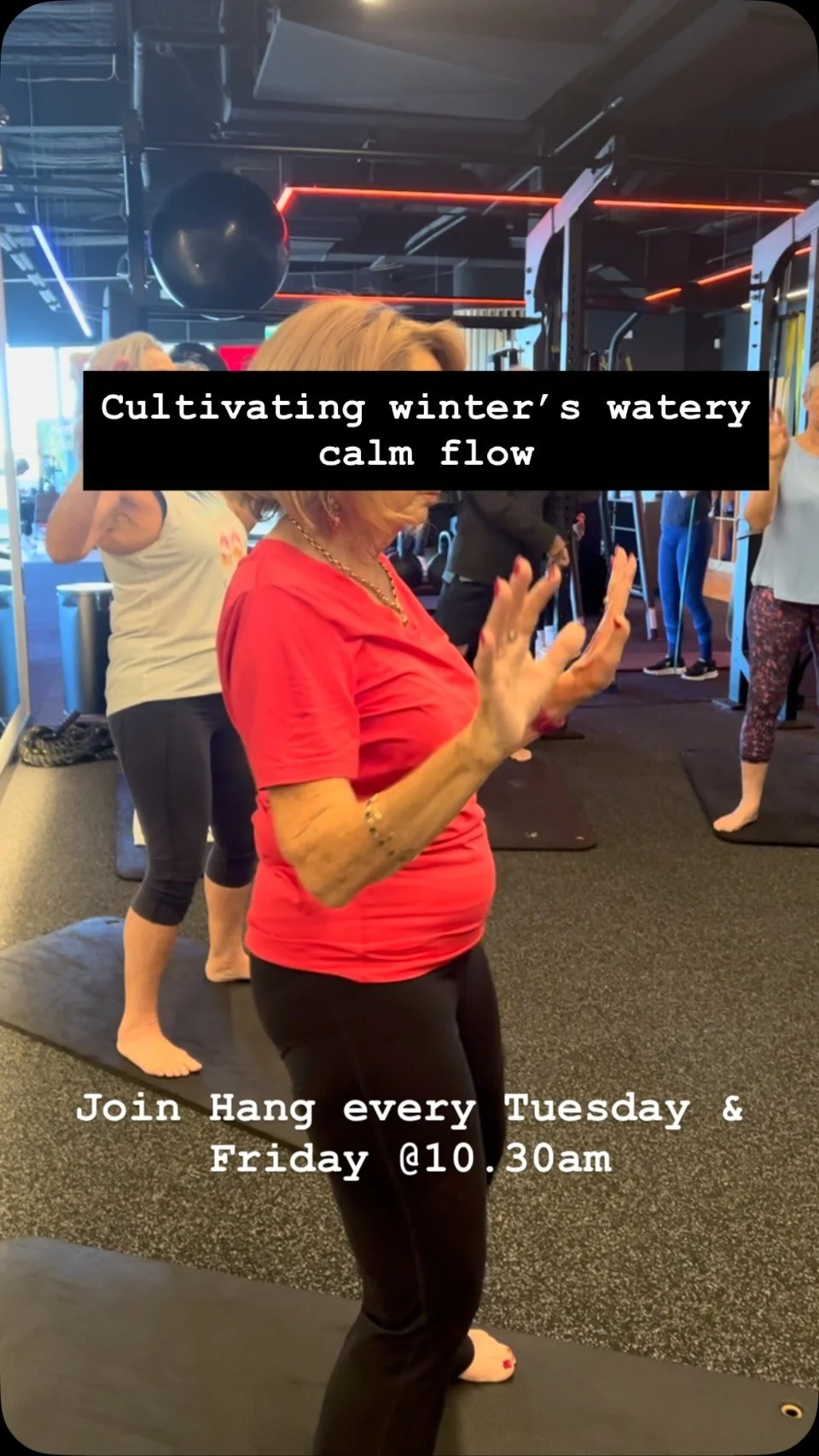
Qi Gong is an ancient Chinese wellness practice with roots stretching back thousands of years and closely connected to Traditional Chinese Medicine. It is a gentle, meditative practice that brings together movement, breath and awareness to cultivate Qi and support greater balance in body and mind. One of the beautiful things about Qi Gong is its simplicity. It can be practiced standing or sitting, almost anywhere, and even 10, 20 or 30 minutes can become a meaningful part of your day.
And did you know that the better-known Tai Chi is a form of Qi Gong? The practices we share at saigon om draw from both traditional and contemporary Qi Gong. As you progress through our teacher training pathway, you'll also explore Yang Tai Chi, including a short Yang-style sequence introduced in Level 2.
Traditional Chinese Medicine helps us understand another important dimension of the practice. We explore Qi, Yin-Yang, the Five Elements, meridians and the emotions traditionally associated with the organ systems. Through Qi Gong, we learn to recognize patterns of imbalance and explore practices that can help harmonise the energy and support a return towards balance.
Mindfulness is woven through everything we do at saigon om. Rather than simply performing movements, we learn to slow down, listen to the body and become more aware of our breath, energy, emotions and habitual patterns. These simple practices can naturally become part of everyday life. Our Qi Gong Teacher Training is a progressive journey, with each level building upon the foundations of the one before it. For this reason, Levels 1–4 are completed in sequence, beginning with Level 1.
History of Qi Gong
The ancient Chinese Taoists, scientists of the subtle energy body and alchemists of the soul’s journey, studied and worked with the circulation of Qi through coordinated flowing movements, deep rhythmic breathing, and meditation. Through subtle yet powerful Qi Gong exercises, meditations, and flowing movements, life-force energy is directed to specific parts of the body, and blocks in the energy body dissolve and radiant Qi flows smoothly into every dimension of the being - emotional, mental, physical, and spiritual.
Who Is the Training for?
All levels of Qi Gong practitioners, including beginners
People of all ages and physical abilities
Health and wellness professionals, movement practitioners, meditators, or anyone seeking a holistic path to well-being
Those inspired to become Qi Gong teachers
Individuals who want to deepen their Qi Gong practice and knowledge without teaching
Benefits of Qi Gong
Low-impact movement that’s easy on the joints
Brings aliveness and energy to the body
Balances emotions
Improves balance and mental focus
Reduces stress and anxiety
Boosts immunity and hormone health
Grounds both body and mind
Shifts stagnant and blocked energy
Recharges areas of depleted Qi
Activates the body’s self-healing powers
Dates
This Qi Gong Teacher Training - Level 1 & 2 runs from February 18 to March 2, 2027.
For graduates of our Qi Gong Teacher Training - Level 1 who are attending only Level 2, the training dates are February 24 to March 2, 2027.
All Levels Welcome
This training welcomes everyone - whether you're new to Qi Gong or an experienced practitioner. It’s thoughtfully designed to meet you where you are, offering support and inspiration every step of the way.
Daily Schedule
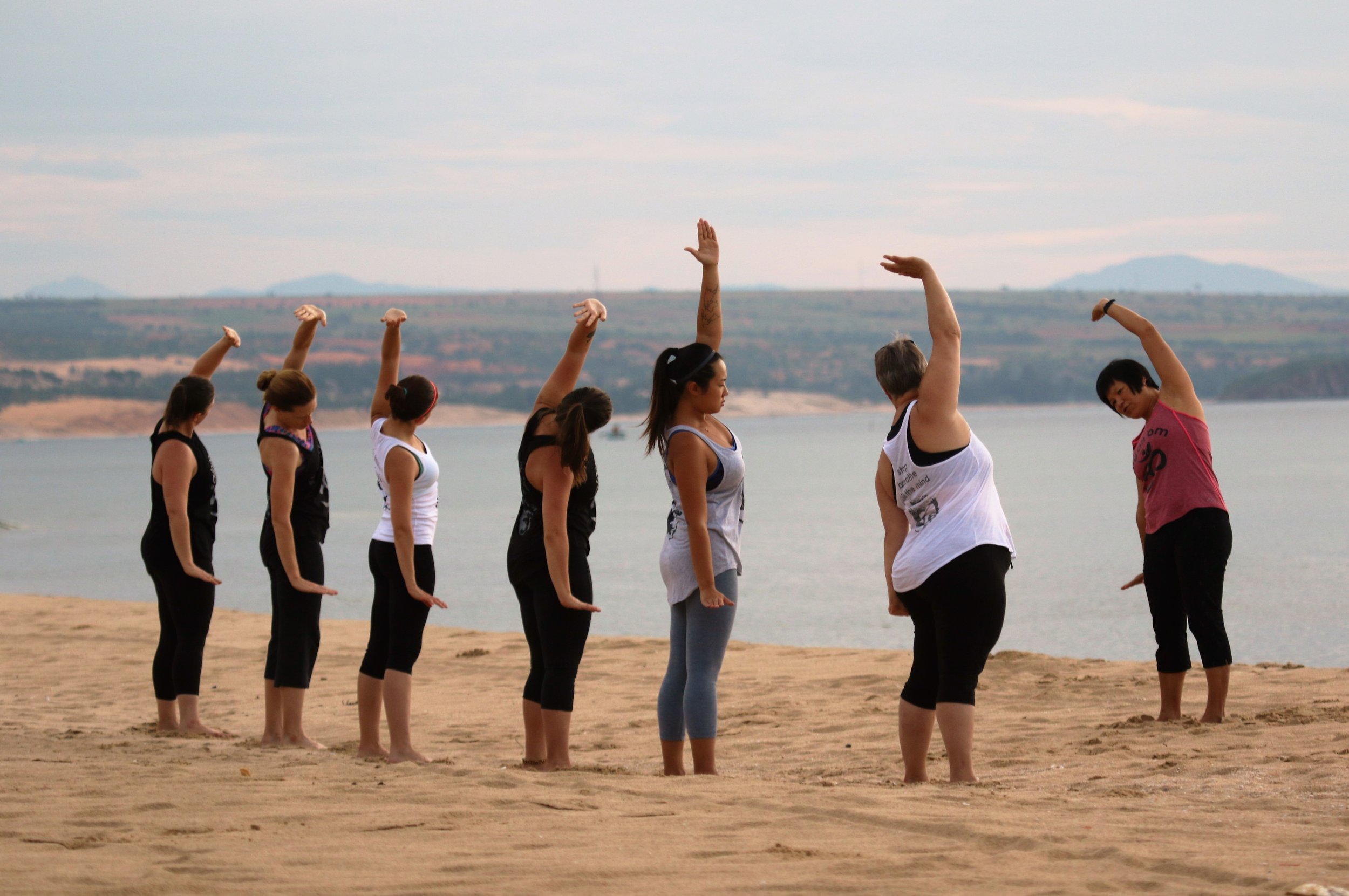
6am Sunrise Meditation & Qi Gong (60 minutes)
7am Breakfast Buffet
9am Morning lecture (2.5 hours)
11:30am Free Time - Relax by the beach or pool, enjoy a leisurely lunch, or rejuvenating spa treatments
1:30pm Afternoon lecture & teaching practicum (2.5 hours)
4pm Free Time - Enjoy dinner at your own pace, take a refreshing swim, or relax with some personal study or rest


Arrival Day - February 18, 2027
9am Bus transfer from Ho Chi Minh City to Mui Ne
1pm Welcome drink & check-in at Full Moon Village Resort
3:30pm Welcome Circle & Gentle Qi Gong Practice
5pm Welcome Dinner
Final Day - March 2, 2027
6am Morning Practice (60 minutes)
7am Breakfast Buffet
8am Free time to pack, relax, and enjoy one last swim
10am Checkout & Bus transfer to Ho Chi Minh City
2pm Arrival in Ho Chi Minh City
What’s Included
12 nights in a private ensuite villa
Vegetarian welcome dinner on the first evening
Daily freshly prepared breakfast buffet
Round trip bus transfers between Ho Chi Minh City and Mui Ne (approx. 3-hour drive). Alumni who only attend Level 2 will need to find own transport to the resort but there is transport for you to return back to HCMC. Please reach out to us and we can recommend a few options.
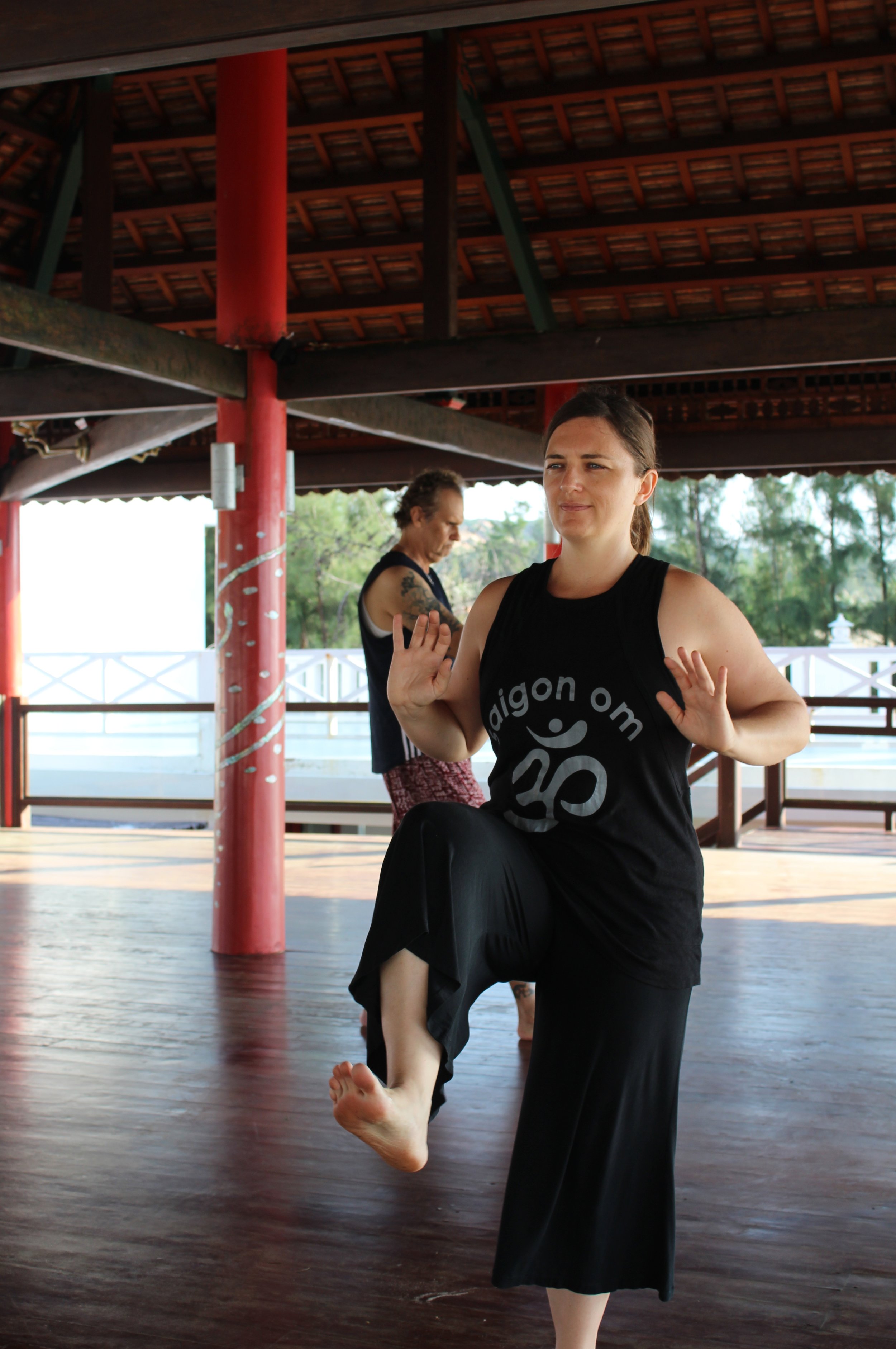
The stunning open-air shala overlooking the ocean, our sacred space for movement and insight
259 sqm swimming pool for relaxation and refreshment
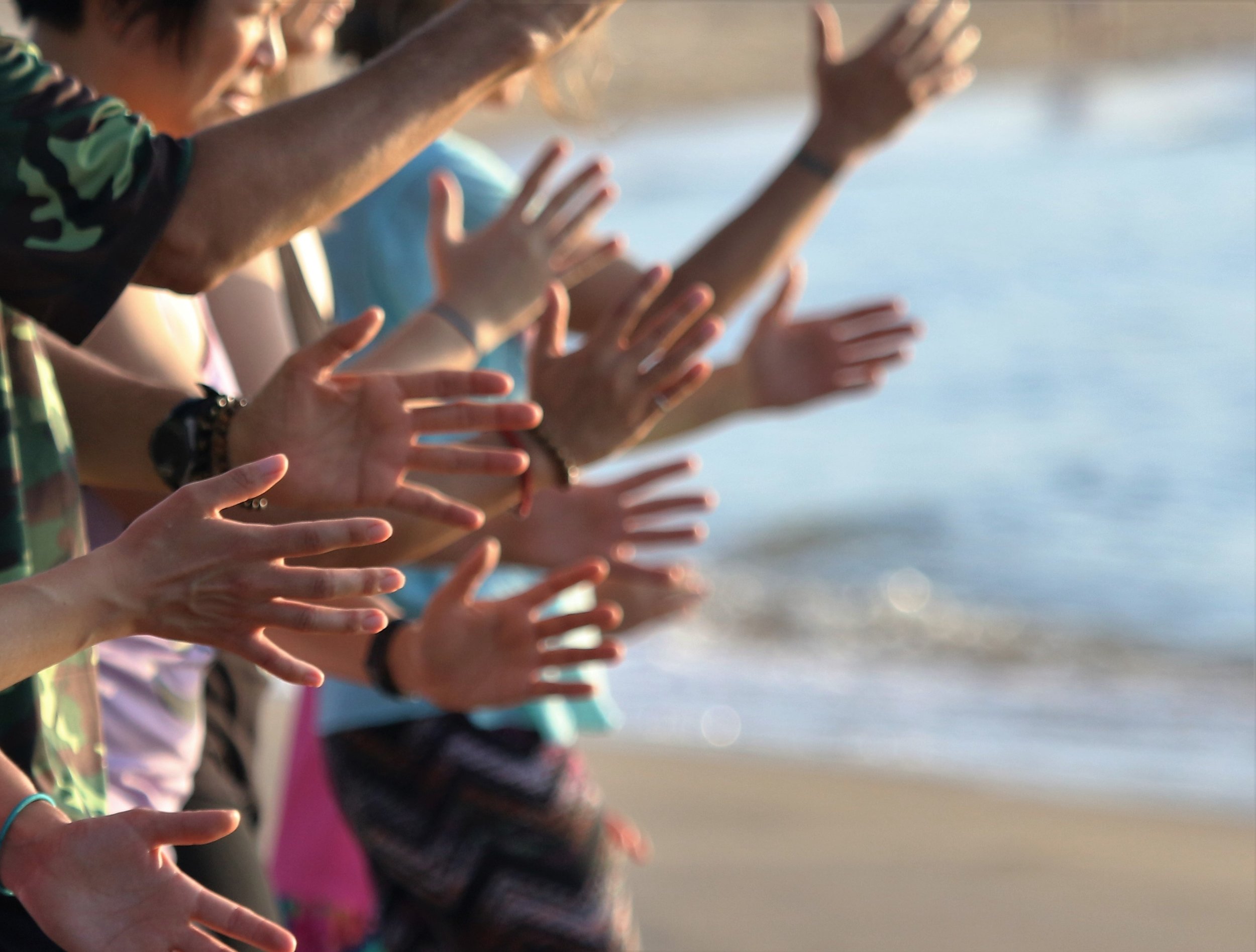
Quiet, private beach for rest, reflection, and connection to nature
A comprehensive training manual
A 100-hour Qi Gong Teacher Training certificate certified by saigon om
3-months access to our Qi Gong Virtual Studio as preparation for the training
What’s Not Included
Lunch and Dinner (excluding the welcome dinner on the first evening) - Enjoy the flexibility to dine at the resort’s restaurant or in the comfort of your private villa with a selection of delicious local and international cuisine, or venture into Mui Ne town to explore its vibrant culinary scene.
Massage and Spa Treatments
International and Domestic Airfare - Travel to Ho Chi Minh City, Vietnam (Tan Son Nhat International Airport) is not included.
Visa Fees & Travel Insurance - Please ensure you have the appropriate visa and coverage for your trip.
Optional Tours and Activities - Additional excursions or experiences in Mui Ne and the surrounding areas are available at your discretion.
Travel Guidance
Once you sign up for the training, you’ll receive our carefully prepared travel guidance to support your journey to Vietnam. Inside, you’ll find practical information on flights, visas, airport arrival, transport, accommodation, packing, and what to expect - along with curated recommendations to help you feel confident and well-prepared.
Accommodation
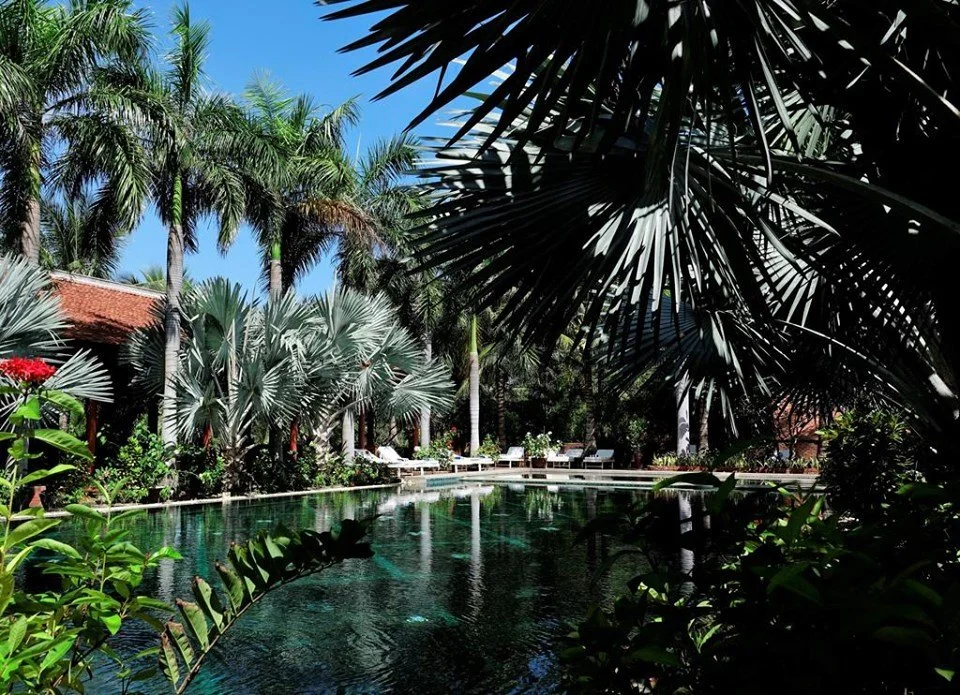




Full Moon Village Resort is a hidden gem in Mui Ne, an award-winning sanctuary where natural beauty meets exceptional hospitality. Nestled along a tranquil stretch of private, sandy beach and surrounded by lush tropical gardens, this idyllic haven invites guests to unwind in spacious, beautifully appointed villas designed for ultimate comfort and charm. With a serene waterfront yoga shala and a stunning 259 sqm pool, the resort offers the perfect setting for both relaxation and renewal.
Each guest will enjoy the comfort of their own private single room within spacious 2- or 3-bedroom villas. Each room features an ensuite private bathroom, daily housekeeping, air conditioning, ceiling fans, in-room safe, and complimentary Wi-Fi, along with essentials like shampoo, conditioner, and both bath and beach towels.
All villas are thoughtfully equipped with a full kitchen, tea and coffee-making facilities, a cozy living and dining area, a private jacuzzi, and a lush garden with the most inviting outdoor daybed - perfect for unwinding in tropical comfort.
“Being aware of Hang’s own extensive studies, experience, and deeply compassionate nature, I knew that I could learn so much from just from being in her presence. It was a beautiful experience of learning and growth in a welcoming and supportive environment. The training deepened my understanding of my body and the healing benefits of mindful Qi Gong movement.
Hang brings warmth, joy, and heart to everything she shares. Her deep knowledge, generosity, and light-hearted teaching style made the training truly special. I left with a full heart and highly recommend it to anyone seeking greater well-being or looking to teach Qi Gong”
Level 1 - Foundations of Qi Gong for Vitality
Begin or refresh your Qi Gong practice with Teacher Training - Level 1, featuring a combination of traditional and modern Qi Gong. You will learn how to design Qi Gong sequences and guide yourself and others in the practice.
Topics
Introduction to energy channels/meridians; based on Traditional Chinese Medicine (TCM) theories
Practices and tools to integrate mindfulness into your everyday life
How to incorporate breath with movement
Introduction to the practices of Qi Gong, Tai Chi, martial arts, and Traditional Chinese Medicine (TCM)
How to design and teach a Qi Gong class - introduction to sequencing and creating your own Qi Gong sequences
Creating your own short Qi Gong sequences based on the individual's interests (for example: health, meridians, energy level, emotional balance etc.)
The best way to learn is to teach - you’ll spend time in small groups to share with one another
How to create your teaching environment
The art of teaching Qi Gong
How to modify movements to accommodate all abilities of students
Establishing and running Qi Gong classes
How to promote your classes with digital marketing
Practices
Qi Gong warm-ups, energy activation exercises to clear energy blockages, increase circulation and get the "qi" flowing
Hand/Palm energy opening sequence (hand meridians focused)
A 12-step Qi Clearing sequence
Digestive sequence
Qi of Joy sequence
Qi Gong to boost your immunity
“Qi walking”
Bonus
Basic self-acupressure release for the face and head (facial tension, headache, sinus issues, etc)
Level 2 - Strengthen Body-Mind & Qi
With a solid foundation as a Qi Gong Practitioner and Teacher from Level 1, deepen your practice and learn more healing tools and practices to add to your Qi Gong tool belt. The focus of Level 2 is cultivating and strengthening your Qi. With a regular and more in depth practice you'll be able to guide your students to grow alongside your Qi Gong journey.
Topics
Introduction to the Three Treasures of Life
Healing aspects of Qi Gong, as used in Traditional Chinese Medicine (TCM) energetic meridians
How "Qi" flow, or lack there of, can cause and effect physical and emotional imbalances and balances
Practicing loving kindness & other good qualities as a teacher to empower your students
Understanding each student as they step into your classroom to help them feel success and happy
How to help students go deeper into their physical & spiritual practice through Qi Gong & mindfulness
How to be a compassionate teacher
Mindful cueing
Practices
Qi Gong warm-ups, energy activation for specific blockages
Toes and Feet energy opening sequence (feet meridians focus)
The 6 healing sounds of Qi Gong
The Five Treasures sequence
The 8-Form Yang Tai Chi sequence
Push hands - physical conditioning to yield and redirect Qi
Martial arts and self-defense applications of Qi Gong
Philosophy of Taoism: Yin-Yang
Movements, postures, directions in Qi Gong/Tai Chi
Bonus
Acupressure to boost yin energy to release stress
Investment
The investment for this Qi Gong Teacher Training - Level 1 & 2 is $2900 USD per person.
A $1000 USD deposit is required to secure your spot. The remaining balance is due 90 days before the training starts.
Registration
If you’re ready to register, please click on the button below and fill out the short form.
If you have any questions, we’d love to hear from you. Please email Sarah & Hang at hello@saigonom.com.


A Special Invitation for saigon om Level 1 Graduates
This Vietnam training is normally designed as a combined Level 1 & Level 2 experience. However, as a special exception for graduates who have already completed Level 1 with saigon om, we’re delighted to invite you to join us directly for Level 2 at a special alumni rate of $1,500 USD per person.
We’re very happy to make this opportunity available to our returning saigon om students and to welcome you back to continue your Qi Gong journey with us in Vietnam.
Level 2 participants will arrange their own transportation from Ho Chi Minh City to Full Moon Village Resort on February 24, 2027 (arriving anytime after 1pm to dip your toes in the pool/ocean), so we can begin practice at sunrise down by the beach first thing the next morning, February 25. As there may be several alumni traveling at a similar time, we’re happy to connect you with one another and help coordinate transportation through the resort. This can make the journey easier and also give you the option of sharing the transfer cost with fellow participants.
Cancellation Policy
We understand that life happens, and sometimes plans need to change. However, as we have made a commitment to the resort, the following cancellation policy applies:
Cancellations made 90 days or more before the training start date: A full refund will be issued, minus a $100 USD processing and administration fee.
Cancellations made within 90 days of the training: A 50% refund will be issued, minus the $100 USD processing and administration fee.
Cancellations made within 30 days of the training: Unfortunately, no refunds can be given.
In the unlikely event that the training must be cancelled due to unforeseen circumstances (e.g., a pandemic), a full refund will be provided.
About Hang Nhan
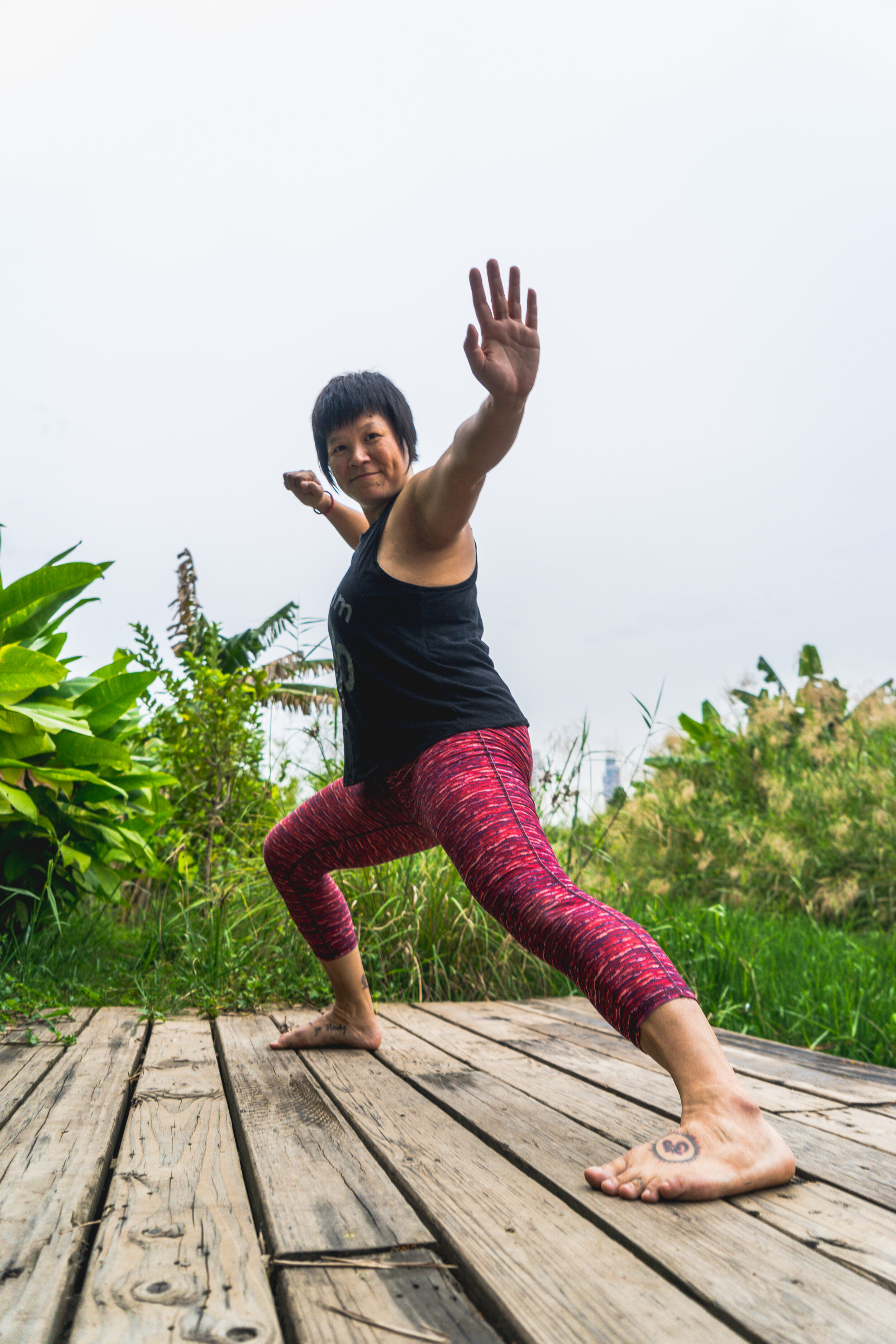
Qi Gong Educator • Teacher Trainer • Co-Founder of saigon om
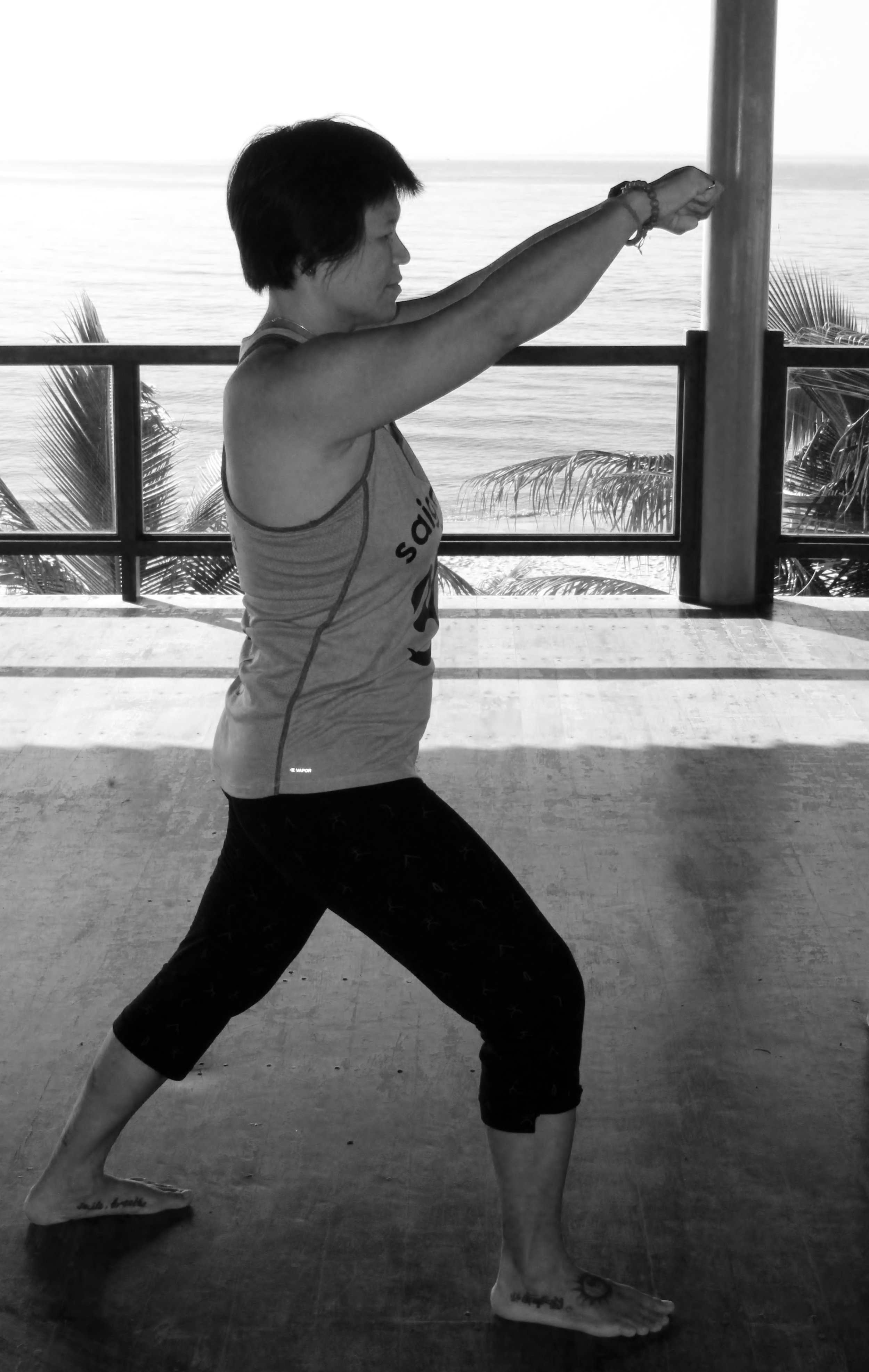
Hang’s path to Qi Gong began through more than 20 years of martial arts, movement and teaching. Her early years were spent training and competing in external martial arts, including Taekwondo, Brazilian Jiu-Jitsu, Judo, Kung Fu and Kali. After years of pushing her body — and accumulating injuries along the way — she began looking for a more sustainable way to cultivate strength, health and longevity.
That search led her to Qi Gong and Yang Tai Chi, first in Canada and later in southern China, where she spent two years from 2006–2008 deepening her study of the internal arts at the root school of Choy Li Fut.
Today, Hang’s work brings together traditional Qi Gong, Traditional Chinese Medicine (TCM), mindfulness and movement science. She is particularly interested in helping students understand the why behind the practice — how Qi moves through the body, how TCM views the relationship between the organs, emotions and energy, and how Qi Gong can help harmonize these patterns and bring the body-mind back towards balance.
Her ongoing studies include Five-Element Acupressure, alongside years of exploration in anatomy, biomechanics, fascia, injury prevention and mindful movement.
A former engineer, school teacher, personal trainer and martial arts instructor, Hang brings an educator’s curiosity to everything she teaches. Her approach is practical, inclusive and down-to-earth: learn the movements, understand the principles, feel them in your own body, and discover how the practice can become part of everyday life.
Through saigon om, Hang now focuses primarily on Qi Gong education and Teacher Training Levels 1–4, supporting practitioners and wellness professionals who want to move beyond simply following Qi Gong movements towards a deeper understanding of the practice.
And when she’s not chasing after her two young rambunctious children, Hang can usually be found stealing little pockets of quiet to work on her first Qi Gong book — a project that, much like Qi Gong itself, is teaching her something about patience, persistence and going with the flow.
“I’m so pleased to have had the opportunity to study with Hang and discover the lineage of the Qi Gong. Hang’s curiosity and passion for Qi Gong, Chinese Medicine and energy meridians was shared in the course and gave me so much insight into the wholistic approach of this practice. Even more, her research into current science related to fascia and meridians was fascinating.
Hang was so joyful, patient and encouraging in bringing out our teaching skills and giving us room to refine and develop our sequences in an organic and empowering way. I’m deeply grateful to have been able to have listened and learned from Hang’s abundant wisdom around Qi Gong. I feel very privileged to continue her lineage of Qi Gong to others on my own teaching journey.”
Learn more about Qi Gong Teacher Training - Level 3 & 4 below
Level 3 - Embody the Tao in Everyday Life (50 hours)
50 hours
Take the practice beyond the training hall.
Level 3 invites Qi Gong to move beyond something you practice and become something you live. Building on the foundations of Level 1 and the internal cultivation of Level 2, we now explore how the principles of Qi Gong, Traditional Chinese Medicine, Taoism and mindfulness can guide the way we move through everyday life.
You’ll deepen your understanding of the Five Elements and learn to recognize the rhythms of both the outer seasons of nature and your own inner seasons. Rather than always trying to maintain the same energy, you’ll explore when to expand, when to conserve, when to act and when to rest. The emphasis also begins to shift from cultivating Qi to embodying the qualities of the practice. How do we remain rooted when life becomes difficult? How do we soften without collapsing? How do we respond rather than react? And how does our own way of living influence the way we teach?
Level 3 is an exploration of these questions through Qi Gong, Tai Chi, meditation, mindfulness and Taoist philosophy.
From Form to Feeling
In Levels 1 and 2, much of the learning is concerned with understanding movement, structure, rooting, connection and Qi. Level 3 asks you to listen more deeply. Partner sensing and Push Hands become laboratories for this exploration. Rather than anticipating or imposing, you begin developing the qualities of listening, following and neutralizing. The same principles can then be explored beyond Push Hands.
Can we listen before responding?
Can we remain rooted without becoming rigid?
Can we adapt without losing our centre?
Can we meet change without immediately resisting it?
These are internal arts principles, but they are also practices for everyday life.
What You’ll Explore
Living the Tao and bringing the principles of Qi Gong into everyday life
Taoism as an embodied philosophy rather than something understood only intellectually
Wu Wei — effortless action — and learning when to act, when to soften and when to allow
Yin - Yang as changing qualities within our bodies, relationships, practice and daily lives
The Five Elements — Wood, Fire, Earth, Metal and Water — and their relationships with seasons, organs, emotions and qualities of Qi
Understanding the outer seasons of nature and recognizing our own inner seasons
How seasonal changes can influence energy, movement, rest and practice
Developing greater sensitivity to what your body and Qi need rather than always following a fixed practice
Sequencing Qi Gong through the lens of the Five Elements
The relationship between movement, mindfulness and everyday awareness
Bringing the qualities of rooting, softness, connection and presence into ordinary moments
Inner & Outer Seasons
Nature does not ask spring to behave like winter. In the same way, our bodies, energy and lives move through changing cycles. Level 3 explores how Traditional Chinese Medicine understands the Five Elements and the seasons, and how these rhythms can inform the way we practice.
You’ll learn to create practices that respond to the qualities of each season while also developing the sensitivity to recognize your own inner season. Sometimes we need movement and expansion. Sometimes we need grounding. Sometimes we need to release. And sometimes the wisest practice is simply to rest.
Rather than asking, “What Qi Gong sequence should I do?” we begin asking: “What does this moment need?”
Teaching from Presence
As the practice deepens, teaching becomes less about delivering information and more about the quality of presence we bring into the room.
You’ll explore:
Teaching from embodied experience rather than performance
Cultivating presence before, during and after teaching
Listening to the energy of the individual and the group
Becoming comfortable with silence and spaciousness
Allowing students time to feel rather than continually explaining
Responding to what is happening rather than rigidly following a lesson plan
Using mindful language and cueing with greater simplicity
Creating Five Element and seasonal sequences with a clear energetic intention
Recognizing when less instruction can create a deeper experience
Continuing to develop your own authentic way of sharing Qi Gong
The teacher becomes part of the teaching. How we stand, listen, speak and respond can communicate as much as the movements themselves.
Mindfulness in Everyday Life
Level 3 deepens the relationship between Qi Gong and mindfulness through both formal and informal practice. Formal practice creates the conditions for awareness. Everyday life gives us the opportunity to live it.
We’ll explore meditation, mindful walking, mindful movement and simple everyday practices that help us notice how we breathe, move, react and relate to the world around us. The invitation is to gradually dissolve the boundary between “my practice” and “my life.”
Practices
Your Level 3 practice toolkit expands to include:
Five Elements Qi Gong
Five Animal Play (Wu Qin Xi)
Seasonal Qi Gong sequences
Organ cleansing practices
Deeper Zhan Zhuang and standing meditation
Walking Qi Gong
Partner sensing and sensitivity practices
24-Form Beijing Tai Chi
Push Hands — Listening, Following & Neutralizing
Sitting meditation
Formal and informal mindfulness practices
Practice → Embody → Live
At this stage of the journey, practice is no longer measured simply by how many forms you know or how long you can practice. The deeper question becomes: How is the practice changing the way you live? Level 1 introduced the foundations. Level 2 taught you to relax, root, connect and cultivate. Level 3 invites you to carry those qualities with you when you leave the training hall.
PRACTICE → EMBODY → LIVE
Practice when you are standing. Practice when you are walking. Practice when you are teaching. Practice when life does not go according to plan. The Tao is not somewhere we arrive. It is something we learn to recognize in the ordinary movements of everyday life. This prepares the ground for Level 4 — Cultivate the Internal Arts, where the journey moves deeper into Nei Gong, Dan Tian cultivation, Zhan Zhuang, Push Hands and the internal qualities of Tai Chi.
Level 4 - Cultivate the Internal Arts (50 hours)
50 hours
Journey further inward.
Level 4 brings together the learning, practices and principles of the previous three levels and takes the journey deeper into the internal arts of Qi Gong and Tai Chi. At this stage, the emphasis is no longer on collecting more movements. Instead, we return to familiar practices with greater sensitivity and explore what is happening beneath the form — structure, breath, intention, connection, relaxation, awareness and Qi. Through Nei Gong, Dan Tian cultivation, advanced Zhan Zhuang, internal breathing, Push Hands and Tai Chi, you’ll explore how the body can become more integrated, responsive and connected from the inside out.
Level 4 is also an opportunity to reflect on your development as a teacher. Technique matters, but teaching the internal arts asks something more of us: patience, humility, curiosity, presence and a willingness to remain a student. The journey does not end with Level 4. In many ways, this is where the deeper practice begins.
What You’ll Explore
The transition from external movement towards internal cultivation
Nei Gong and the internal qualities that support Qi Gong and Tai Chi
The Three Internal Harmonies — harmonizing Xin (heart-mind) with Yi (intention), Yi with Qi, and Qi with Li (power)
Developing whole-body connection rather than moving the body as separate parts
Cultivating Song — releasing unnecessary tension while maintaining structure, awareness and connection
The relationship between relaxation, rooting, structure and internal power
Dan Tian awareness and cultivation as a foundation for integrated movement
How breath, intention and awareness can support internal practice
Refining sensitivity through stillness, movement and partner practice
Exploring the relationship between physical structure, connective tissue and whole-body movement
Returning to familiar Tai Chi movements to experience them through a deeper internal lens
Developing Nei Gong
Nei Gong can be translated simply as “internal skill” or “internal work.” Rather than being a single sequence or technique, it describes qualities that are gradually developed through consistent practice.
Level 4 introduces you to some of these internal qualities through standing, breathing, movement and awareness. You’ll explore how relaxation, alignment, intention, breath and whole-body connection can begin to work together.
The movements may look simple from the outside. The practice is increasingly happening on the inside. Instead of asking:
“Am I doing the movement correctly?”
we begin asking: “What can I feel?”
“Where am I holding unnecessary tension?”
“Am I connected from the ground through the whole body?”
“Can I move with less effort?”
This shift from doing to sensing is at the heart of the internal arts.
Song — Relaxed, but Not Collapsed
One of the central explorations of Level 4 is Song. Often translated as relaxation, Song is more nuanced than simply becoming loose or passive. It is the ability to release unnecessary muscular tension while maintaining structure, connection and awareness.
You’ll explore how greater relaxation can allow the body to become more responsive and integrated. The paradox is important:
Less unnecessary effort can create greater connection.
Softness does not mean weakness.
Structure does not require rigidity.
As Song develops, movement can become quieter, more efficient and more connected.
Dan Tian Cultivation
Level 4 deepens awareness of the lower Dan Tian as an important centre within traditional internal arts practice. Through standing, breathing and movement practices, you’ll explore how attention to the Dan Tian can support grounding, centring and whole-body coordination. Rather than treating the Dan Tian as an abstract concept, we approach it experientially.
Can you feel your centre?
Can movement begin from the centre rather than the limbs?
Can the upper body remain soft while the lower body stays rooted?
These questions become part of an ongoing practice rather than something to master in a weekend.
Tai Chi — Returning with Fresh Eyes
In Level 3, you learned the 24-Form Beijing Yang Tai Chi sequence. In Level 4, we return to the form. But this time, the emphasis changes. Instead of primarily remembering choreography, we use familiar movements as a laboratory for exploring internal principles. You’ll revisit the 24-Form with greater attention to:
Rooting and grounding
Song and release
Dan Tian awareness
Whole-body connection
Weight transfer
Intention and direction
Continuous movement
Yin - Yang within transitions
Moving from the centre
The form may be the same. Your experience of it is not.
Push Hands — Listening Through the Body
Push Hands continues the partner work introduced in Levels 2 and 3.
At Level 4, the practice becomes a deeper exploration of sensitivity, connection and response.
Rather than trying to overpower another person, Push Hands teaches us to listen through touch.
You’ll continue exploring:
Rooting while interacting with another person
Maintaining Song under gentle pressure
Listening through physical contact
Following rather than resisting
Neutralizing incoming force
Recognizing tension in yourself
Maintaining your centre while adapting to change
Using structure and connection rather than unnecessary muscular effort
Push Hands gives immediate feedback. When we become rigid, we feel it. When we lose our root, we notice. When we stop listening, our partner lets us know. In this way, partner practice becomes another teacher.
The Path of the Teacher
By Level 4, you have accumulated many practices, teaching tools and experiences. The question now becomes less about what else you can teach and more about how you teach. You’ll explore:
Teaching from embodied experience
Knowing the difference between what you have learned and what you have genuinely integrated
Staying within the scope of your knowledge and experience
Continuing to practice what you teach
Creating space for students to discover rather than providing every answer
Teaching internal concepts in clear, accessible language
Remaining curious as your understanding evolves
Recognizing that different students may experience Qi Gong differently
Cultivating humility, patience and beginner’s mind
Continuing your own education after certification
A good teacher does not need to demonstrate how much they know.
The practice is often revealed in how they listen, how they respond and how they hold space for others to learn.
Practices
Your Level 4 practice toolkit includes:
Internal Qi Gong — Nei Gong Fundamentals
Advanced Zhan Zhuang
Dan Tian cultivation
Internal breathing practices
Bone and fascia strengthening exercises
24-Form Beijing Yang Tai Chi — revisiting the form through internal principles
Push Hands — deeper listening, following, neutralizing and connection
Traditional Weapons — Introduction
Traditional Weapons — Introduction
Traditional weapons practice offers another way to explore extension, coordination, intention and whole-body connection. Rather than approaching the weapon simply as an object held in the hand, we begin exploring how it can become an extension of the body.
This introductory practice offers a glimpse into another dimension of the traditional internal arts while reinforcing principles already explored throughout the training: rooting, centre, intention, connection and fluid movement.
Cultivate → Integrate → Share
Level 4 is not about reaching the end. It is about integrating what you have learned.
Level 1 gave you the foundations. Level 2 invited you to relax, root, connect and cultivate. Level 3 asked you to embody the practice and carry it into everyday life. Level 4 brings you back inward — refining the internal qualities that have quietly been present throughout the entire journey.
CULTIVATE → INTEGRATE → SHARE
Continue practicing. Continue questioning. Continue listening. Continue learning. The movements will become familiar. Your understanding of them will continue to change. The deepest measure of the practice is ultimately not how many forms you know, how much Qi you can feel, or how impressive your movements appear. It is how the practice shapes the way you move through the world. The four levels complete your 200-hour Qi Gong Teacher Training journey. But they do not complete your Qi Gong practice. They give you a foundation from which to continue.
“I absolutely love attending Hang’s Qi Gong classes. This is a new practice for me - it is gentle and healing and I am really enjoying discovering the Qi Gong philosophy and approach to working with the body, mind and spirit. Hang is an extremely knowledgeable teacher, guiding the class with care, humour and love. Every class is a gift and I highly recommend this practice to everyone, especially those who would appreciate a gentle, mindful experience.”